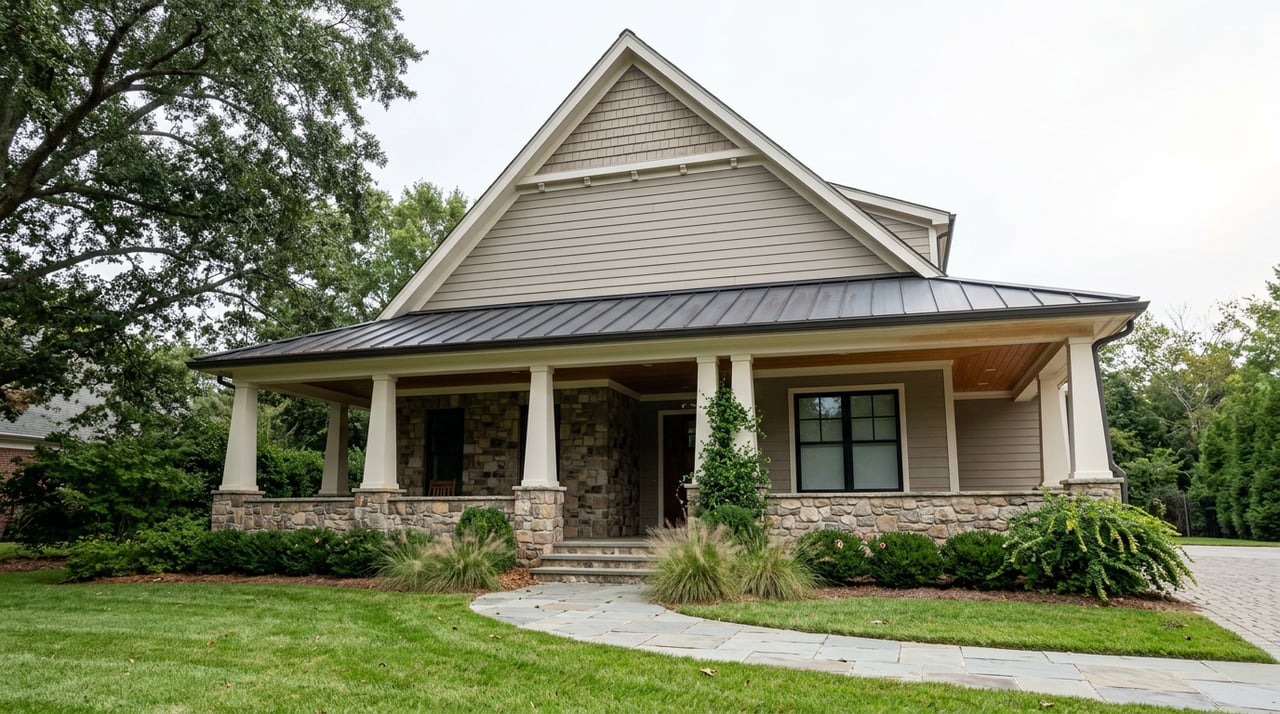
You're touring a home in Evans, and the listing sheet has a property tax line near the bottom. It looks reasonable. You do the mental math, fold it into your monthly budget, and move on to the next showing.
That number belongs to someone else.
Georgia homestead exemptions attach to the person who occupies the home, not to the address itself. The day title changes hands, every exemption the seller built up over years of ownership disappears with them. The new owner starts at zero and has to file for everything again, on a deadline, with no discount for having just closed. In most years that's a quiet administrative detail. In Columbia County in 2026, it's a bigger deal than usual, because two brand new exemptions just came online for the first time, and nobody's tax bill, buyer or seller, has caught up to what they're actually worth yet.
The Exemption Follows the Deed, Not the House
Georgia's standard homestead exemption reduces the assessed value of a home by a set amount before the tax rate is applied, but only for the person who owns and occupies the property as their primary residence as of January 1 of the tax year. It has to be filed. It doesn't come with the deed, and it doesn't transfer at closing.
That means the tax bill a longtime Evans owner has been paying reflects an exemption history that started the day they moved in and filed their own paperwork. When they sell, that history ends. Whoever buys the home has to start that same process over, from the beginning, regardless of how long the exemption had been in place before.
Columbia County Just Added Two More Layers
Until this year, Columbia County homeowners who filed for the standard exemption got $2,000 knocked off their assessed value for state, county, and school purposes combined. That's still true. What changed is what sits on top of it.
The Georgia legislature signed off on House Bill 784 in May 2025, creating two new $8,000 homestead exemptions specific to Columbia County: one against county ad valorem taxes, one against school district ad valorem taxes. Both were contingent on voter approval, and Columbia County voters settled that question on November 4, 2025. The county measure passed 18,392 to 2,790, a margin of about 86.5 percent. The school district measure passed 17,688 to 3,483, about 83.5 percent. Both take effect for tax years beginning January 1, 2026, which means this is the first year either one has ever applied to an actual tax bill.
Here's how the three now stack for anyone filing fresh in Evans:
| Exemption | Applies to | Amount | Status in 2026 |
|---|---|---|---|
| Standard (S1) | State, county, and school ad valorem taxes | $2,000 off assessed value | Existing |
| County (HB784) | County ad valorem taxes only | $8,000 off assessed value | New this year |
| School district (HB784) | School district ad valorem taxes only | $8,000 off assessed value | New this year |
A buyer who files for all three isn't getting a bigger version of the old exemption. They're getting three separate exemptions that didn't exist together before this year, each tied to a different taxing authority, each requiring its own line on the application.
None of It Arrives on Its Own
Filing happens at the Columbia County Tax Commissioner's office at 630 Ronald Reagan Drive, Building C, in Evans. You'll need a valid Georgia driver's license showing your current Columbia County address and proof that your vehicle is registered in the county. If you moved from a different Georgia county, you'll also need a letter from that county confirming you weren't already claiming a homestead exemption there, since Georgia law only allows one homestead exemption per household at a time.
Once the county approves it, the exemption renews automatically every year after that. You don't have to refile annually. The only things that reset it are a change in ownership, a change in your primary residence, or a shift in which exemption category you qualify for. That's the trade: get the paperwork right once, and it takes care of itself for as long as you own and occupy the home. Get it wrong, or miss the window, and Georgia law doesn't offer an extension. You wait a full year.
The April 1 Deadline and the January 1 Timing Problem
The filing window for any given tax year runs from January 1 through April 1. Eligibility is based on who occupies the home as their primary residence on January 1 of that year, which creates a real timing squeeze for anyone buying in the spring.
If you close in January, February, or March, you generally still have a shot at filing before April 1 and getting the exemption applied to that same tax year. If you close after April 1, the earliest you can file is the following January, and the exemption won't reduce your bill until the tax year after that.
This matters more in Evans than in slower markets, because homes here don't sit long enough to build in a comfortable buffer. As of May 2026, homes in Evans were going to pending in around 16 days. Add a typical closing timeline on top of that, and a buyer who starts touring homes in February can easily find themselves closing right around the deadline, with little room to spare if an inspection negotiation or a lender delay pushes the closing date back even a couple of weeks.
What the New Layer Is Actually Worth
Combined, the two new HB784 exemptions remove $16,000 from a home's taxable assessed value once approved, on top of the $2,000 already available under the standard exemption. At Columbia County's current unincorporated millage rate of just over 25.7 mills, that $16,000 in exempted assessed value works out to somewhere in the neighborhood of $400 a year in reduced county and school tax, though the exact figure depends on whether the property sits in unincorporated Columbia County or inside city limits, since incorporated areas carry a higher combined millage rate. This is a directional estimate, not a substitute for the figure that will show up on your actual notice of assessment.
That $400 range is meaningful, but it's also easy to miss entirely if a buyer assumes the exemption is a formality their closing attorney or lender handles automatically. It isn't. It's a separate filing, at a separate office, on a separate deadline from anything that happens at the closing table.
Frequently Asked Questions
Do I have to reapply every year once I'm approved? No. Once Columbia County grants the exemptions, they renew automatically each year unless there's a change in ownership, a change in your primary residence, or you become eligible for a different exemption category.
What happens if I miss the April 1 deadline? Georgia law doesn't allow an extension. You'll need to wait until the next filing window opens on January 1 and file again before that year's April 1 cutoff.
Is filing a homestead exemption the same as appealing my assessed value? No, and they're easy to confuse. Filing for a homestead exemption reduces the taxable portion of your assessed value. Appealing your assessment is a separate process you'd use if you believe the county's fair market value determination itself is too high, and it has its own 45-day window that starts from the date on your Notice of Assessment, typically mailed each spring.
If you're closing on a home in Evans this year, or getting ready to list one, the exemption timeline is one more piece of the process worth walking through before you're standing at the closing table wondering why it wasn't mentioned sooner. Tara McNaylor works through these local details with clients as part of the closing process itself, not as an afterthought. Let's connect and talk through where your specific timeline lands.