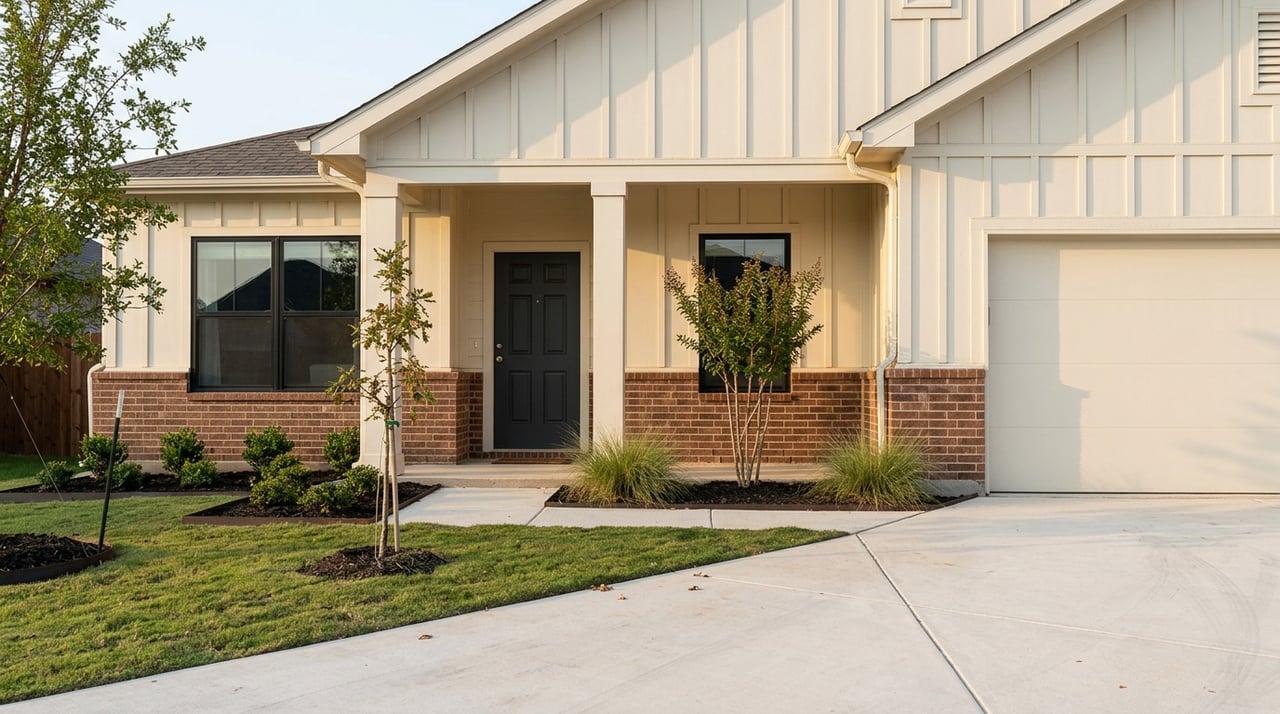
Drive through Tillery Park or Weatherstone on any given Saturday and you will see the signs before you see the houses. Five thousand dollars here. Fifteen thousand there. A year of HOA dues thrown in if you sign before a set deadline. The numbers are big enough to stop a car mid-turn, and in a market where builders are competing for the same pool of buyers, they are meant to.
What the signs do not say is that the incentive is not a gift. It is a trade. And the shape of that trade determines whether the deal in front of you is actually the best one available, or just the one that was easiest to advertise.
The Trade Hiding Inside the Incentive
Almost every large builder incentive in Grovetown right now comes with a string attached: finance through the builder's preferred lender. That is not an accident or an oversight you can negotiate around after the fact. It is how the math works. The builder can afford to hand you $5,000 or $15,000 toward closing costs or upgrades because the in-house lender is also making money on your loan, and the two numbers are designed to balance each other out.
That does not make the incentive bad. It makes it conditional. The rate and fees a preferred lender quotes are not automatically the most competitive ones you could get, and the only way to know is to get a second quote from an outside lender before you sign anything. A buyer who skips that step is not necessarily losing money, but they are also not necessarily saving it. They are trusting a number they never checked.
Part of why builders lean this hard on incentives comes down to timing. By the end of 2025, homes in Grovetown were sitting on the market noticeably longer than they had the year before, and that kind of slowdown is exactly what pushes builders to sweeten a deal rather than hold firm on price. An incentive tied to a preferred lender lets a builder move inventory without technically lowering the sales price on paper, which matters for how future homes in the same phase get appraised. Understanding that mechanism does not mean turning down the incentive. It means asking what it is actually costing you before you decide it is worth it.
A Different Contract, A Different Set of Defaults
Resale purchases in Georgia typically run through the standard state purchase agreement. New construction rarely does. Most builders draft their own contract, and that document resets several defaults buyers assume are universal.
| Typical resale purchase | Typical new-construction purchase | |
|---|---|---|
| Earnest money | Around 1% to 2% of the purchase price | Ranges more widely, commonly 1% to 5%, plus separate deposits when upgrades are added |
| Contract used | Standard Georgia purchase agreement | Builder's own contract, drafted by the builder's attorney |
| Deposit escrow | Held by a broker or closing attorney | Terms vary by builder and should be confirmed in writing |
None of this makes new construction a worse choice. It makes it a different one, and the burden falls on the buyer to read the builder's contract as carefully as they would a resale agreement, rather than assuming the protections are the same because the process feels similar.
The Inspection VA Buyers Can't Skip
If you are financing with a VA loan, expect a wood-destroying organism inspection, commonly shortened to WDO, on top of your standard home inspection. This is a separate report, usually costing between $75 and $150, and it is required by most VA lenders regardless of whether the home is brand new or decades old. Termites are active in Georgia year-round, and a slab that was poured six months ago is not automatically exempt from the check. Budget for it as its own line item rather than assuming it is bundled into your general inspection cost.
The Costs That Don't Show Up in the Listing Price
New construction in Grovetown tends to come with a homeowners association, and the monthly dues vary more than buyers expect, running from around $30 a month in some communities to over $100 in others. That number is not cosmetic. Lenders factor HOA dues directly into your debt-to-income ratio, which means a $95 monthly due can change what you qualify for in a way a similar increase in property taxes might not. Ask for the exact HOA fee in writing before you get attached to a floor plan, not after.
The second cost that hides in plain sight is the school zone. Columbia County school assignments do not always match what an address search or a builder's marketing page implies, especially in newer subdivisions where district lines were drawn before the streets were finished. If a specific school is part of why you are choosing Grovetown, verify the assignment directly with Columbia County Schools rather than relying on what shows up in a listing description.
The Tax Bill That Arrives After You've Moved In
Georgia assesses property value as of January 1 each year. A home that didn't exist on that date, because it was still under construction, gets picked up in the following year's assessment instead, which means new-construction buyers sometimes receive a supplemental tax bill separate from the regular annual notice. In Columbia County, that supplemental bill is prorated for the months remaining in the tax year and is due within 30 days of mailing, separate from the standard November 15 deadline that applies to everyone else. It is not a penalty and it is not a mistake. It is simply how the assessment calendar catches up to a house that was still framed lumber when the county took its snapshot. Ask your closing attorney whether a supplemental bill is likely for your specific closing date so it doesn't land as a surprise.
Get the Name Right, Get the Details Right
One small marker of how current a source is on this market: the installation most Grovetown buyers are moving toward or away from was renamed Fort Eisenhower in 2023, then restored to Fort Gordon on June 11, 2025. Plenty of builder marketing and lender pages still haven't caught up. It is a minor detail on its own, but it is a useful test. If a guide, a listing, or an agent is still calling it Fort Eisenhower without acknowledging the change, ask what else in their information is a year or two out of date.
Before You Sign
None of this is a reason to avoid new construction in Grovetown. It is a reason to slow down at exactly the moment the paperwork asks you to speed up. Get an outside lender quote before you accept a preferred-lender incentive. Read the builder's contract for what it changes about earnest money and deposit terms, not just what it promises about the finished home. Confirm the HOA due in writing and run it against your own budget, not just the lender's approval. Verify the school zone with the district directly. And ask early whether a supplemental tax bill is likely, so it shows up as an expected line item instead of a surprise one.
A Few Questions Worth Asking Before You Tour
Is the builder incentive still worth it if I use my own lender? Sometimes. Some builders will apply a smaller version of the incentive even if you don't use their preferred lender. It is always worth asking directly rather than assuming the incentive disappears entirely.
Does the WDO inspection apply even if the home has never been occupied? Yes, for most VA loans. The requirement is tied to the loan type, not the home's history.
Can I negotiate the earnest money amount on a builder contract the way I could on a resale offer? Sometimes, especially earlier in a community's build-out when the builder has more incentive to lock in a buyer. It is worth asking before assuming the number on the contract is fixed.
New construction in Grovetown can be a genuinely good move, especially with the pace of building happening near Fort Gordon right now. But the incentive that gets you in the door is a negotiation, not a gift, and the contract behind it deserves the same scrutiny you'd give any other legal document with your name on it. If you're weighing a builder contract or trying to figure out what a specific incentive is really costing you, Tara McNaylor can walk through the numbers with you before you sign. Let's Connect.