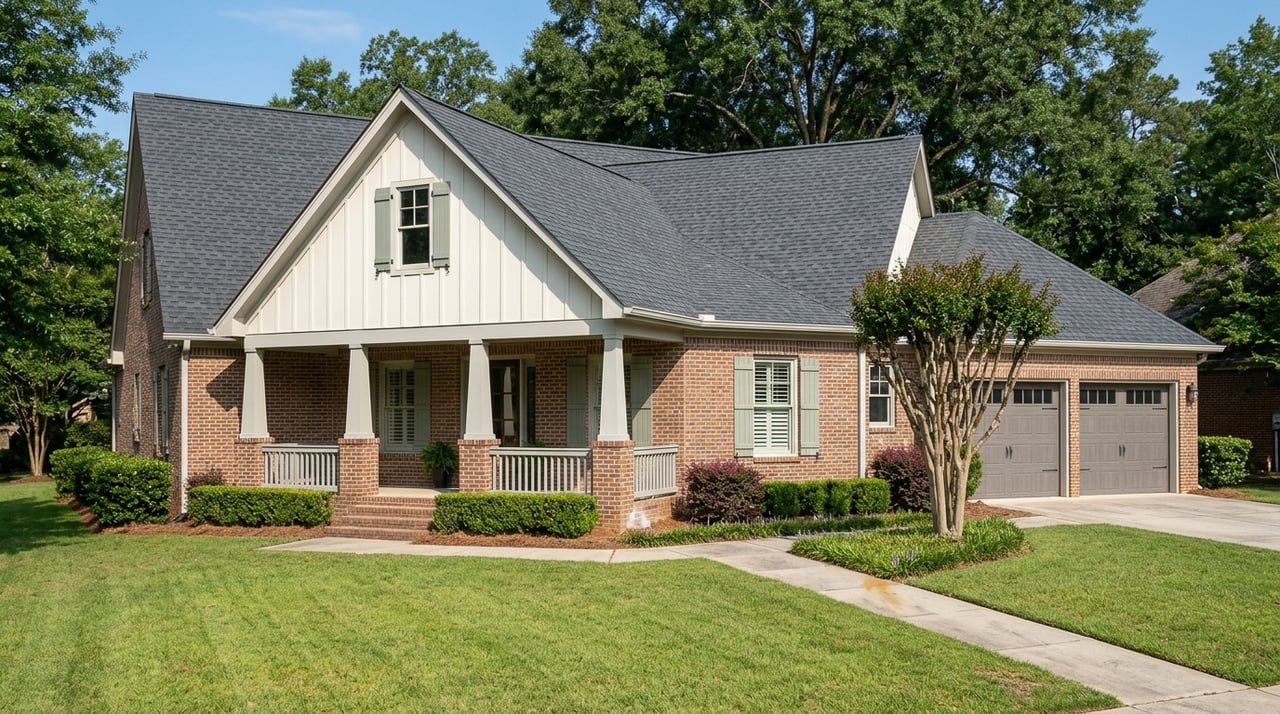
When you list a home in one of Evans's association-governed neighborhoods, whether that's Knob Hill with its mature landscaping and community feel, or Bartram Trail with its golf course and creekside greenspace, one piece of paperwork always shows up before closing: the resale certificate. It states what you owe the association, what transfer fee the buyer will pay, and in Bartram Trail's case, a one-time contribution to the Bartram Trail Wilderness Trust equal to roughly a quarter of one percent of your sale price, money the trust uses to maintain the community's trails and greenspace. Buyers, sellers, and title companies treat this document as a formality. Pay the balance, sign the letter, move on.
Starting in 2027, that formality depends on something it never had to before: whether your homeowners association is registered with the State of Georgia.
A law that changes who's watching
On May 12, 2026, Governor Brian Kemp signed Senate Bill 406, the Georgia Property Owners' Bill of Rights Act, into law. It's the first time Georgia has created a statewide oversight system for homeowners associations, administered through a newly formed Georgia Property Owners' Associations Division inside the Secretary of State's office. Georgia has roughly 11,200 community associations covering about 2.3 million residents, and a meaningful share of Evans's newer subdivisions, from Knob Hill's roughly $540 in 2026 POA dues to established neighborhoods charging closer to $700 a year, fall under this kind of governance.
The law rolls out in two stages, and only one of them is live right now.
The first piece took effect July 1, 2026. Before a Georgia association can collect or be awarded attorney's fees in a collections dispute, it now has to send a new written notice by certified mail or statutory overnight delivery, and a judge has to review whether the fees charged were reasonable. If you've had any friction with your association over unpaid dues or a disputed fine, this is already shaping how that gets resolved.
The second piece, the one that matters most for anyone thinking about a 2027 sale, doesn't arrive until January 1, 2027. Starting that day, no person or entity may operate a Georgia property owners association unless it's registered annually with the Secretary of State. An association that fails to register loses the power to collect fines or fees, file or record liens, or start a foreclosure. Registrations expire every December 31 and have to be renewed. The same date brings a jump in the foreclosure delinquency threshold, from $2,000 to the lesser of $4,000 or twelve months of regular assessments, along with a pre-foreclosure notice period that stretches from 30 days to 60, and a requirement that associations keep assessment and foreclosure records for at least ten years.
Where this touches your closing table
Here's the connection that isn't obvious from the outside. A resale certificate is, at its core, an association exercising its right to collect a fee. So is a transfer fee. So is Bartram Trail's Wilderness Trust contribution, which the resale package documents at closing. Under the new law, that right depends on the association's registration being current.
For a home closing between now and the end of 2026, this doesn't change anything yet. The registration requirement simply isn't in effect. But if you're listing this fall with an eye toward a spring 2027 closing, which is the normal rhythm for a lot of Evans sellers, you're planning a transaction that will land squarely inside the new rule. If your association hasn't completed its registration by the time your closing date arrives, the fee it's asking your buyer to pay, or asking you to pay as the seller, may not be one it currently has the legal standing to collect.
This isn't a hypothetical drafted by lawmakers with no sense of who runs these boards. Many Evans subdivisions, especially the ones built in the early 2000s that never scaled up to a professional management company, are run by volunteer boards. The Community Associations Institute's Georgia chapter argued during the legislative session that this creates a duplicate registration system on top of the routine corporate filing associations already handle through the Secretary of State's Corporations Division, and that the added cost and paperwork could catch smaller, self-managed boards off guard. Whether or not you agree with that critique, it points at something practical: the associations most likely to miss a brand-new deadline are exactly the kind that run a lot of Evans's older, established neighborhoods.
There's also a timing wrinkle worth knowing if you've sold a home in Georgia before. The state has never set a hard statutory deadline for how fast an association has to turn around a resale certificate once it's requested. Industry practice runs around ten business days, but that's custom, not law, and a board that's behind on other compliance work is a board that's more likely to be slow producing your paperwork too.
What to ask before you list
None of this means panic. It means asking one question earlier than you otherwise would. If your Evans home sits inside an HOA or POA, whether that's Knob Hill, Bartram Trail, or another association-governed subdivision, ask your board or management company directly: are you planning to complete Secretary of State registration before January 1, 2027, and do you have a timeline for it?
Get that answer in writing, ideally at the same time you request your resale certificate. The Secretary of State's office has said the specific rules and procedures for this registration were still being finalized as of mid-2026, with a public comment period expected in October, so even well-intentioned boards may not have a completed process to point to yet. Knowing where your association stands gives you months of runway to sort it out before a closing date is riding on it.
If you're selling before the end of 2026, none of this changes your process. If you're aiming for a 2027 closing, and especially if your association is self-managed rather than run through a professional management company, this is worth raising now rather than during your due diligence period.
A few questions worth asking
Does this apply to every home in Evans? No. It only applies to properties governed by a homeowners or property owners association. A lot of Evans's rural and semi-rural acreage, particularly the larger lots without a subdivision structure, has no HOA at all and isn't touched by this law.
Isn't my HOA already registered with the state? Possibly, but not necessarily for this purpose. Georgia has long required nonprofit corporations, including most HOAs, to file basic paperwork with the Secretary of State's Corporations Division. SB 406 creates a second, separate registration specifically tied to an association's authority to collect fees, file liens, and foreclose. Being current on one doesn't automatically mean you're current on the other.
What happens if my association simply doesn't register? Based on the law's text, an unregistered association keeps existing, it just loses its enforcement tools: it can't collect fines or fees, can't file or record a lien, and can't initiate foreclosure until it registers. For a seller, the practical risk is a resale certificate or transfer fee that sits on uncertain footing rather than a transaction that can't happen at all.
Where can I check on this myself? The Secretary of State's office has posted the bill text and a running FAQ on its Georgia Property Owners' Associations page, which is the most direct way to see how the registration process is developing as the January 2027 date approaches.
Selling a home in an HOA neighborhood has always meant one more phone call than selling a home without one. This year, that call is worth making a little earlier than usual. If you're weighing a listing timeline in Knob Hill, Bartram Trail, or anywhere else in Evans with an association attached, Tara McNaylor can help you sort through what your specific HOA packet will need and when to start asking for it. Let's Connect.